Sunday, January 24, 2016

Working with the earth element; or, getting my hands dirty

Plants have always eluded me when it comes to having a relationship with them. Admittedly, I have not had many plants in the past with which to work on that relationship and to learn their ways and needs. I once had a cactus plant that I bought from a grocery store as a teenager and, several weeks later, was alerted to it when I heard a crinkly sound coming from the plant. I immediately took it outside in time to see thousands of tiny little spiders emerge from it. Considering my fear of spiders (another thing I have been trying to work on), my experience was soured toward plants for a while.

This has changed in the past few years. I have been strongly drawn to the element of earth and her flora realm. The hitch is that I am severely allergic to grass pollen which aggravates my asthma, too. A push and a pull from the earth. Touch me if you dare. Entheogens have become particularly fascinating to me and have lured me back towards greening my thumb on Earth's flora. Bees were another source of connection I seek. Last February, I took a basic beekeeping course from my local county beekeeper society. It was absolutely fantastic and highly informative! I have fallen in love with bees and my path towards eventually having a hive (or two) of my own to build practical, working knowledge and further understanding is something I am continually striving towards.

I recognize that I am still a newbie when it comes to Mother Nature's abundant mantle and the Green Man's lush beard, and that before I started in with plants I knew to be dangerous and harmful to me and my loved ones, I wanted to build up my abilities with less deadly plants (though, ones I am still drawn towards).


I started out with lavender. A wonderful bee-friendly flowering plant. Partial to the flowers and scent, too, I thought that would be a lively plant to grow and have the opportunity to harvest later on. It thrived wonderfully for a while. I would keep the plant indoors, but set it outside during the day most of the week when the weather was nice. It filled the pot in no time and then things took a turn. It began to get very brown and die. When it stopped growing new sprouts and looked very much dead, it was consigned to the wastes.


My next plant was cat mint from seeds that were lingering away in my to-plant container, but never made it into soil. There was a chance that they would not sprout, but at the time, I was only interested in seeing if they would take. The plant did very well indoors and grew wonderfully. However, when I began taking it outside, it acquired powder mold and, after trying numerous remedies, had to be dumped and burned to prevent the mold from spreading to other plants and the pot thoroughly cleaned and sanitized. A second attempt became home to the eggs of an insect and it, too, had to be consigned to the wastes.

Almost simultaneously, I was trying my hand at aloe. Another important plant to have in one's arsenal. Again, my plant thrived at first. From the little 5-inch sprite to the massive, mother dragon who has bore many daughters that I have now. Alas, she, too, looks much more droopy and browning. But I have been fighting fiercely to make her healthy again.

All of these failures are felt. I deeply lament the lack of understanding I have and constantly seek to remedy and improve my knowledge. I seek a deep conversation with the silent living. I seek to learn them better. To care for them better. To serve them better.

And I think I am starting to really listen, look, and learn with my hands. I can feel the unspoken conversation building up to form an understanding.


A few days after buying a healthy looking mint plant this summer, she suddenly began to express brownish-grey spots on her leaves. Scouring the internet, I found nothing that seemed, to my still untrained eye, to exactly identify it. Her new sprouts would develop fine, but then began showing signs of the blight shortly after. Pruning the affected leaves did not help. Pruning stems did not either. My last ditch effort was to prune the stems breaking the surface to nubs about a half-inch tall. To my ecstatic amazement, not only did the plant bounce back, all of the leaves and stems were free of the blight that had haunted it.

I am still learning from my mint mistress. I believe she has accepted me and is willing to work with my unskilled hand to train me. And she is, to which I am very grateful. I am more vigilant to watering schedules. The importance of soil composition and nutrients. She received her first heavy pruning today--something she expects much more often. And when the ground thaws, she will be divided and allowed to conquer a small portion of our acreage. I'm sure she has larger, grander plans than that, though.


I am still a novice, but the bounty of mint that has been yielded to me is incredibly rewarding and encouraging.

Plants need more than just water and sunlight--and even these vary from plant to plant. They are living beings that have nutritional needs, personalities, and requirements. Some desire constant attention, pruning, watering, splitting, or feeding. Others prefer less contact and handling. I am starting to pay more attention to these requirements and needs. I mourn the ones that have died in my poor care, but I am trying, more and more, to learn the language and world of our plant spirits. While getting my hands dirty outside comes with a severe physical reactions, I am learning to listen and, hopefully, forge connections with the land around me and the plants I am seeking relationships with.

Friday, December 18, 2015

Hermead excerpt


via Wisdom of Athena Episode I in Hermead Epic of Philosophers Volume 1 by Surazeus (Simon Seamount)

Tuesday, January 1, 2013

New Year 2013

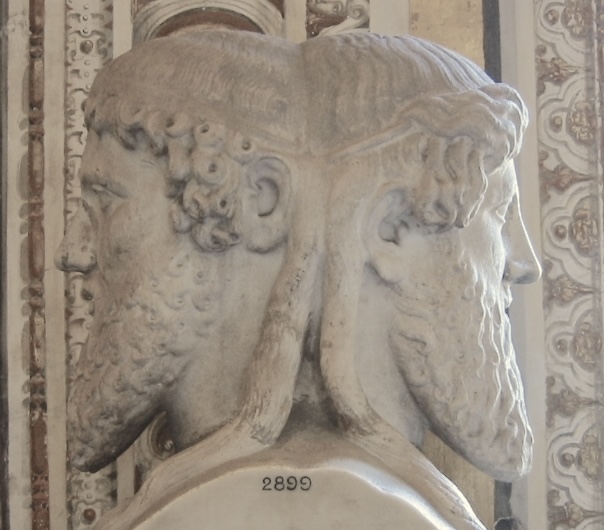
"The practice of making New Year’s resolutions is said to have begun with the Babylonians as early as 2600 B.C. The Roman god Janus—who gave January its name—was pictured as two-faced so that one face took a retrospective view and the other looked forward to new beginnings and renewed commitments." -The Old Farmer's Almanac [email blurb]

Janus Bifrons from the Vatican Museums


Have a wonderful, blessed, and prosperous New Year! Welcome 2013!

Sunday, December 30, 2012

Chasing a little ghost

For the past few nights, there have been little footprints at the back door. They appeared to be from the young bunny that resides in our tall grass mound. So last night, I placed an appeasing offering as bait to catch a glimpse of it, as I am quite fond of cute little bunny rabbits. My aim was to befriend it and even try and bring it in from the cold. To welcome and incorporate it into our home if, of course, it seemed reciprocal to the invitation (came in on it's own). I cut up a delicious apple into small chunks and tossed a few of them in a path leading to the door. All night I kept checking back for a sign only to find the pieces still there. The next morning, however, fresh prints appeared and the slices were gone.

I repeated my little gift of apple slices tonight and was surprised to find that the footprints that I had been seeing were actually the markings of a mouse.

 Footprints in the snow

 More by the door

 The mouse comes out of the bottom of his little snow tunnel and walks to the top hole.

He then proceeds to shallowly tunnel under the snow every now and then.

He alluded me in getting a picture of him running around and making footprints in the snow, though.

Thursday, November 1, 2012

Apple Ritual

It is the first time in quite a while that I have done a ritual. My life has been quite busy. I feel the call of the Gods. Athena. Ma'at. Thoth. But I feel too tired, too busy, not prepared, not presentable. These are excuses and I know it.

So tonight, on Halloween, Samhain, Witch's New Year, whatever title you prefer, I come to them unprepared, dingy, ashamed. I light my white candle. I think and speak to my ancestors and loved ones. I bear my apology to the Gods and ask for wisdom, strength, and resolution in my path. I thank Them for what I have and for the blessing of knowing my husband. I love him and thank Them for bringing our paths together.

I rub clean my apple on my shirt. Imprinting a piece of me onto it. Imperfectly, I cut it in half horizontally. Revealing the star within. The star--a most sacred symbol. Air, Water, Fire, Earth, Spirit. The culmination of life found within. To nourish oneself, mentally, spiritually, and physically, we must eventually come to the core. Life is taken by consuming the flesh, but the core provides the seeds for new life.

As the Gods take their offering, I ask for nourishment of the mind, body, and soul. I ask for wisdom, strength, and balance. As the offering is consumed, I ask that my shortcomings are taken away. Consume my procrastination. Consume my languid tendencies. And in their place, plant the seeds of energy, healthful dedication, determination, and wisdom.

Sophia, Agape, Eros.

Thursday, March 29, 2012

Sophia

Last Friday I donated to Saint Sophia. It wasn't much by a long shot, just a meager few dollars, but a wholly unexpected set of feelings and callings were ushered forth and I have been contemplating the experience all week.

Walking into the local Walmart mumbling over the list of things I needed to pick up for the weekend, I heard, then saw, an older man dressed in a plain brown robe with a long salt and pepper beard asking for donations on behalf of the St. Sophia Orthodox Church. "Homes for homeless" was the call. Normally, I shy away from donating money to churches. As a general rule, and I am going to be absolutely blunt about this, I feel that there are a lot of things that many would not like about me and my beliefs and so I feel my money is not worthy of them either. I do have exceptions, such as donating food or clothing and occasionally when the cause is beyond their own pulpit. But that day I suddenly felt the need to put my money into the wooden box. My memory flashed back to the time when we lost our home to a house fire and became relatively homeless for about a year and how it really took a tole on our family. First living in the old, unattached garage, having to bath in the still working shower with no hot water, then moving into my grandfather's house with the constant pressure of feeling very unwelcome by his wife--at least the salt-softened water was warm. But to many homeless, that's still a roof over one's head and I thought of the blessings I have been given by the Spirits and Divines since then from that great loss.

The story behind St. Sophia and her three children, Faith, Hope, and Love (sometimes as Charity), is brutal and terrible, but the story and religious commentary are allegorical. Some Orthodox churches don't even recognize that story as the basis for their name, rather, they view it as another aspect of Jesus. Regardless, it wasn't her sainted namesake or story that called to me, but the meaning behind her name. The link to a higher wisdom and reason (Logos). Athena called. Sophia spoke. I was so taken aback that I felt as if I went on autopilot. I walked through the store gathering my non-essential weekend materials mulling the feeling over. After checking out, I nearly "autopiloted" straight to the car, but the old man's call woke me and at once I felt the need to give.


Sophia means "wisdom" in Greek and I have always loved Athena for her role as the Goddess of Wisdom. The concept of Hagia Sophia is immensely sublime to me. Holy Wisdom. Attributing wisdom, learning, and knowledge to a holy deed. Picking up and absorbing a book as ritual practice. Hagia Sophia is recognized as the Holy Spirit of the Christian trinity in female form in some Christian mysticism sects; giving a Gnostic notion of feminine balance to the male dominated faith. Holy Wisdom in and of itself is beautiful. Coupled with the idea that one of femininity's gifts she offers is comfort, as a mother would comfort her child, linked all these ideas together in perfect sense. Homes for the homeless were being given by such a feminine form as Sophia, no matter her manifestation or what association with this church, it was beautiful and compassionate and it moved me.

I have a personal philo-sophia. Combined, we get the word philosophy, but I like the thought of the words hyphenated. Philo-sophia. The love of wisdom. It's simpler, yet expansive. The Sophiaology of Hellenistic philosophy. It felt as though Athena was calling out to me. Rekindle our connection; I understand. Give and know me again. I gave for Athena. I gave for Sophia. I gave my offering for compassion and hope to those who need it.

The Personification of Wisdom
at the Celsus Library in Ephesus, Turkey

Friday, February 24, 2012

Dictionary of the Vulgar Tongue

Project Gutenberg has released a re-published free version of the 1811 Dictionary of the Vulgar Tongue by Francis Grose. I thought it would be a fun to take a look at a few examples of 1811 "vulgar" language that was "[...] confined almost exclusively to the lower orders of society [...]".

Image via The Telegraph

ADMIRAL OF THE NARROW SEAS. One who from drunkenness vomits into the lap of the person sitting opposite to him.
ANKLE. A girl who is got with child, is said to have sprained her ankle.
APPLE DUMPLIN SHOP. A woman's bosom.
(I found this one particularly funny!)
BAPTIZED, OR CHRISTENED. Rum, brandy, or any other spirits, that have been lowered with water.
BAT. A low whore: so called from moving out like bats in the dusk of the evening.
BELL, BOOK, AND CANDLE. They cursed him with bell, book, and candle; an allusion to the popish form of excommunicating and anathematizing persons who had offended the church.
BOB TAIL. A lewd woman, or one that plays with her tail; also an impotent man, or an eunuch. Tag, rag, and bobtail; a mob of all sorts of low people. To shift one's bob; to move off, or go away. To bear a bob; to join in chorus with any singers. Also a term used by the sellers of game, for a partridge.
TO BOX THE JESUIT, AND GET COCK ROACHES. A sea term for masturbation; a crime, it is said, much practised by the reverend fathers of that society.
BREECHES BIBLE. An edition of the Bible printed in 1598, wherein it is said that Adam and Eve sewed figleaves together, and made themselves breeches.
BURNING SHAME. A lighted candle stuck into the parts of a woman, certainly not intended by nature for a candlestick.
CAPRICORNIFIED. Cuckolded, hornified.
CAT CALL. A kind of whistle, chiefly used at theatres, to interrupt the actors, and damn a new piece. It derives its name from one of its sounds, which greatly resembles the modulation of an intriguing boar cat.
CHOCOLATE. To give chocolate without sugar; to reprove.
COMING! SO IS CHRISTMAS. Said of a person who has long
  been called, and at length answers, Coming!
COMMODE. A woman's head dress.
CUP OF THE CREATURE. A cup of good liquor.
EXECUTION DAY. Washing day.
FLASH THE HASH: Vomit.
GOSPEL SHOP. A church.
HASH. To flash the hash; to vomit.
HUSSY. An abbreviation of housewife, but now always used as a term of reproach; as, How now, hussy? or She is a light hussy.
KNOCK ME DOWN. Strong ale or beer, stingo.
LAZY MAN'S LOAD. Lazy people frequently take up more than they can safely carry, to save the trouble of coming a second time.
(I'm guilty of this once and a while)
LIGHT TROOPS. Lice; the light troops are in full march; the lice are crawling about.
MARRIAGE MUSIC. The squalling and crying of children.
MUFF. The private parts of a woman. To the well wearing of your muff, mort; to the happy consummation of your marriage, girl; a health.
OIL OF GLADNESS. I will anoint you with the oil of gladness; ironically spoken for, I will beat you.
POISONED. Big with child: that wench is poisoned, see how her belly is swelled. Poison-pated: red-haired.
PUBLIC LEDGER. A prostitute: because, like that paper, she is open to all parties.
RABBIT CATCHER. A midwife.
RUFFLES. Handcuffs.
SNAGGS. Large teeth; also snails.
SPLICED. Married: an allusion to joining two ropes ends by splicing.
TWIDDLE-DIDDLES. Testicles.
VAMPER. Stockings.
VELVET. To tip the velvet; to put one's tongue into a woman's mouth. [...] To tip the velvet; tonguing woman. (See To Tip)
To Tip the Velvet (in a more "vulgar" manner *wink*)


VIXEN. A termagant; also a she fox, who, when she has cubs, is remarkably fierce.
WHITE SWELLING. A woman big with child is said to have a white swelling.
WORD OF MOUTH. To drink by word of mouth, i.e. out of the bowl or bottle instead, of a glass.


It is also interesting to see some words and phrases that we still use the meanings of:

ADRIFT. Loose, turned adrift, discharged.
AGAINST THE GRAIN. Unwilling. It went much against the grain with him, i.e. it was much against his inclination, or against his pluck.
BABBLE. Confused, unintelligible talk, such as was used at the building the tower of Babel.
BACON. He has saved his bacon; he has escaped. He has a good voice to beg bacon; a saying in ridicule of a bad voice.
BAGGAGE. Heavy baggage; women and children. Also a familiar epithet for a woman; as, cunning baggage, wanton baggage, &c.
BELLY. His eye was bigger than his belly; a saying of a person at a table, who takes more on his plate than he can eat.
BONES. Dice.
CADDEE. A helper. An under-strapper.
CHIP. A child. A chip of the old block; a child who either in person or sentiments resembles its father or mother.
CRIB. A house. To crack a crib: to break open a house.
CROCODILE'S TEARS. The tears of a hypocrite. Crocodiles are fabulously reported to shed tears over their prey before they devour it.
DOCK: Lie with a woman.
DUDS. Clothes.
FLABAGASTED. Confounded.
GREEN. Young, inexperienced, unacquainted; ignorant. [...]
HARP. To harp upon; to dwell upon a subject. [...]
To KICK THE BUCKET. To die. [...]
LINGO. Language. [...]
MAN OF THE WORLD. A knowing man.
NINE LIVES. Cats are said to have nine lives, and women ten cats lives.
PEEPERS. Eyes. Single peeper, a one-eyed man. [...]
SKIT. A joke. A satirical hint.
SWEET HEART. A term applicable to either the masculine or feminine gender, signifying a girl's lover, or a man's mistress: derived from a sweet cake in the shape of a heart.
TOMBOY. A romping girl, who prefers the amusement used by boys to those of her own sex.
WHISTLE. The throat. To wet one's whistle; to drink.

For more old school sexual slang, check out Mookychick's Victorian Sexual Slang Guide. Enjoy :)

Friday, February 17, 2012

Lupercalia


Lupercalia takes place on February 15th, and this year I was lucky to have found my box containing my stone wolf figure in time to set up a small alter. We haven't finished unpacking from the move, not by a long shot, but I managed to prepare a small offering and alter before the end of the day. I hadn't consecrated or cleansed the space yet, so it seemed like a great time to do so as Lupercalia is a purity festival (as well as a fertility and health fest), that developed from an older festival called Februa (where we get the month of February from) which also revolved around purification and spring cleaning/cleansing.

Communing with the wolf spirit, I ask for protection for ourselves and the land we inhabit as well as driving away evil and consuming any malevolence that comes our way.

Monday, January 30, 2012

Evaluation of my time with domestic Paganism

I have come to embrace the fact that my magickal development has come to a sluggish, if not completely halted, growth. I have become unsatisfied with the lack of development within myself this past year, both magically and mundane. In the mundane (which extends into the magickal), much of the lack of development comes from hesitation. We have been preparing to move since September of last year and at the end of every month, it has had to be postponed until the next month for reasons that are beyond our control. And here we are, coming to the end of January with a more solid hope of moving by next weekend. I have had boxes packed and lined against the walls for what seems like forever. Most of my books have been packed since around October, as well as my winter clothes, with the expectation of having them unpacked before the first snows came.

I have also come to realize that what little I have been relying on for my magical development has not completely been right for me. I follow a few domestic Pagan blogs and people, but have found that, though they sometimes have interesting things to read and discuss, it all seems to be less core to my spiritual needs. Not that it's their job to enlighten me, it's just that I thought domestic Paganism was something my path contained, almost by a mandatory thought that domestic works were supposed to be a part of Paganism. Obviously, that is not the case, though it does feel that it has become increasingly popular to be a domestic Pagan housewife in larger Pagan circles, as well as in regards to newer Pagan reading materials. But this is entirely not for me, and it has come to the point that I can admit this to myself. Nothing about the idea of being a domestic Pagan sounds very appealing, and most of the domestic Pagans I do still read and follow hardly ever post on such matters anyway. It almost feels like a farce. Even the word "domestic" leaves an unsavory taste in my mouth. It's definitions and associations with being tame or docile, sedentary, and the idea of a clean home being of fairly high importance sounds remarkably dull to me. None of these are even close to being my ideal choice of living.

So, why did I come to the conclusion that a domestic path was what I should be on? The fault came from a far recess in my brain that likes to play with my fears: anxiety. The idea that I had reached one of my life goals and also managed to find a great man in the process made it feel like it was my turn to do "my time" for achieving those joys. That there was some societal expectation of a price to pay for the happiness I had been given and, since I had taken one step, I was now forced to take on the whole concept of "settling down" which includes the "logical" step towards breeding. For these dilemmas, I thought it natural to turn to the domestic witchery side of Paganism to learn and adapt.

However, over the past year, nothing there eased that awkwardness and anxiety and it was only after reading a messy-embracing lifestyle post (that I sadly cannot find and ironically was posted my a domestic Witch) that I realized all these assumptions about me, my life, and my supposed roles are all a bunch of coffee grinds. I'm not a clean freak, a morning person, a kid person, a homeschooler, a family organizer, a parent, or a "grown-up". I enjoy playing video games, making things, reading, learning, a well placed f-bomb, drinking, having sex, being inspired, communing with Nature and her Gods and Goddesses, contemplating and analyzing the world and all she has to offer. I want so much more than a tidy house with a family and small garden to be my realm. It all screams social standards and expectations that are constrained with a hint of dated stereotypes. I want outside of the lines and perfect shapes, outside of the squares and patches.

I want to commune with my ancestors, the spirits, and the energy of Nature. I want to know more, to feel more, and to experience more. The hearth is important, but, for me, there are more baser, stripped, raw, natural, and freeing methods to establish it than through domestic routes. I thank the Divines for their inspiration to evaluate my path.

Monday, December 5, 2011

The path ahead


Once again, it is December 5th. I am now fully one year older. Time feels so different this year. Condensed in some places and expanded in others.

I have felt off pace on my path for a while now, struggling to keep up and muster energies. But now it feels as though the top of the hill is in sight and I can see my path ahead of me and into the future. I see my goals coming into clearer view and my time and energy spent more wisely. I have been waiting for this move to happen and it is now in plain sight-- something that can be taken both literally and spiritually/philosophically. The next journey is waiting to start and I am terribly excited for it.

Nearly time to finish packing and cleaning and renewing energies. Some view Spring as a time to do such things, but I am a child of winter. I am most in my element here. The darker skies, cold, snowy air, and bundles of warmth in homes and under blankets appeals to my nature. Appropriately, December 5th has always seemed to mark the beginning--that this is what a new year actually feels like. Today begins the proportional relationship between the influx of energies and the cresting of struggling to see ahead of me--the last steps before the ease of walking downhill along my path again.

The phrase "happy new year" has never been more relevant.

Thursday, November 10, 2011

By Azura!

concept art of Azura's shrine
Beautiful!

So a brief interruption of life and (non-video game) thought to bring you two beautiful images of Azura from the new Elder Scrolls game Skyrim.

I am very excited to go to the midnight release tonight and obtain my copy of amazing adventure, story, and lore. (And maybe a little swag too!) How fitting that there should be a full moon tonight as well.

I adore Azura and all that she represents. Some people love super heroes or a character in a book or movie, but I love Azura, the Goddess of Dusk and Dawn.

Here is her shrine in Skyrim. 
A game 5 years in the making.

actual gameplay image of Azura's shrine


"Fear not, for I am watchful."

EDIT: For those that keep searching my page for where and how to obtain Azura's Star, The Elder Scroll's Wiki has a link to each of the games versions and how to get them. Hope that helps :)

Tuesday, November 8, 2011

Halloween and Perspectives

Happy belated Halloween!

This is the most wonderful time of year for me. I absolutely love everything about it. And with these last few weeks of finding some of my family's gravestones, it has gathered even more importance and momentum. 

I will admit that I have not always celebrated Halloween in regards to the veil and my ancestors as strongly as I am coming to understand, but that is the beautiful thing about Paganism; it is almost always a continuing growth of knowledge, understanding, ritual, and worship. I am opening myself up to the areas that I have previously been hesitant to (because of being overwhelmed by the loss of loved ones), only to find that it is calling me and awakening a strong and powerful feeling of connected-ness to the Wheel of Life and Death as well as to my ancestry and heritage. 

As a Pagan, my particular view of Halloween is with a two-fold mentality. I personally do not directly celebrate the Gaelic/Celtic/Wiccan Samhain because, as I have mentioned before, I do not follow the Celtic path, but a combination of common ideas and traditions. That said, I do celebrate Halloween as both the secular holiday and the spiritual holy-day. In fact, I begin celebrating the autumn, the veil, and the dead towards the beginning of October and continue on through the end of November, while the secular Halloween starts a week or so before hand and ends the evening of Halloween. The energies that surround the weeks before and after Halloween are very powerful to me--like a sugar high for my soul--and I am finding a new outlet for that energy in investing more time into my ancestry. I have begun diving deeper into my lineage and creating a family tree that now spans over 160 people on my father's side.

I still do many secular Halloween holiday traditions. Which are, of course, often based in old Samhain rituals. My husband and I carved pumpkins, passed out candy, and I usually dress up in costume (though these last two years have had a lot going on at the time). 


Our pumpkins this year


We also bake our pumpkin seeds. A very easy way to separate pumpkin seeds from the pulp is to let them soak in water for a day. Once that happens, most of the pulp will pull away and sink, leaving the seeds floating. Any seeds that are still attached to the pulp can easily be squeezed/pinched off their stringy lines.

After I clean the pulp away and out of the water, I strain them and place them in salted water and soak for a few days (between 2 and 4 days, depending on how busy I am) to make them nice and salty inside. While they sit, give them a stir every now and then so the top layer doesn't go dry.

When I am ready to bake them, I strain the seeds, put them into a bowl and add some extra virgin olive oil and salt. I'm not too precise and just eye the mix because pumpkins will yield different amounts of seeds. You want enough olive oil to lightly coat just enough to keep the salt stuck to the shell. The seeds of two pumpkins go onto two foiled baking sheets that also have a light coating of EV olive oil on them. Make sure the seeds are not sitting on top of one another or too crowded or they may not bake fully or evenly.

Place them in the middle of the oven for 30 minutes at 350°F at first, just to steam the seeds and get a lot of that water out, and then turn the heat down to 200°F and let them bake for 2 hours. Rotate pan after the first hour if your oven bakes unevenly to avoid burning the seeds. Salt or season with other flavors to liking.

The finished seeds were gone before I could snag a photo, but here are the seeds soaking.


This is also when I start to break out a lot of my baking tools and recipes. There's nothing like walking into a home from the chilly air outside and inhaling the lovely aromas of chocolate, bread, or cookies.

Spider legs
Pretzels mixed into chocolate that was cooling gives them a spiky, thick look.

Cauldron cake pops
Because there isn't enough candy and chocolate in the house as it is.

Tuesday, October 25, 2011

Cleaning their graves

This weekend I went out and cleaned up my family's graves.

It might sound odd that I had never seen many of their graves, but I have had a difficult time with their passing, especially of my father in 2003 and my grandmother (my father's mother) in 2008. In both cases as well as for some of my grandparents on my mother's side, I have only two weeks ago gathered up the courage and strength to go to the cemetery and find them, but I am terribly glad that I did. I have found a new piece of the healing process has yet to finish and it is very bittersweet.

As I said, two weeks ago I found their graves and after finding them, I decided I had to come back and begin taking care of them. My father's has sadly begun to sink into hill of the ground a bit deeply. But my mind is at rest knowing where their graves are now. My absence at the cemetery between their deaths and now  is due in large part to resisting the idea that they are no longer here. Especially my grandma. It still hurts to think that I will never be able to call my grandma up, particularly around this time of year, and ask her all kinda of questions about baking. It still hurts to think of the soured relationship I had with my father that was turning around, thanks to my grandma, that I will never get to finish seeing mended. It still hurts to think that my grandma wasn't able to be there for my wedding and won't be there to spoil and teach my future child to paint and craft the way we did when I was little.

But that pain is...easing, surprisingly. It's difficult and I doubt that I will ever be able to think of the great times I had with my grandma or the way my father glanced at me when we hadn't seen or spoken to each other in years and not shed tears. I won't be able to move on from those thoughts, but at least I am able to anchor them. I have a place that I can go to when I want to let them know from whatever heaven or homeland they are looking down from now, that I am thinking about them and I still care. I still love them. And I miss them terribly.

So in the soggy mud, I went to the cemetery and cleaned their graves. Digging away encroaching earth, grass, and vines to fully reveal their gravestones once more. You can see the eagle on my father's grave again. You can see the entirety of my grandma's name and dates.

I finished by placing my little white pumpkins on their graves. A little present and promise that I will visit more often. That I'm sorry it took this long.

Tuesday, October 18, 2011

Lavender and Wooly Bears

Sometimes pictures are prettier than words:

 Took my first harvest from our lavender that was planted this spring.

The Wooly Bears are out!
According to folklore, this little guy had about half his body in brown segments, 
so we should have a pretty normal winter.

Wednesday, August 31, 2011

My favorite part of the Bible


I do have favorite parts of the Bible. Surprising as that may seem to some, I have read many parts of the Bible and am reading it --wholly-- again because I believe that it is important to know what others believe in and to understand where others derive their faith and morals from.

To me, the Bible is another culturally reflective group of stories and mythos. It is a selective collection of works of both Jewish and Christian ideas. It has went through numerous translations (both good and bad attempts) and in it's creation and evolution, it has picked up in a few hidden and not-so-talked-about-places some beautiful poetry. Especially within the Song of Songs (or Song of Solomon). And that is my favorite part of the Bible.


A Hebrew to English translation can be found here.

Beautiful phrases and descriptions and personal love between two human beings just resonates from those passages. Intimate dialect between two lovers. These are ideas that are heavily concealed in all the Christianity I have been exposed to and it always left me wondering why. Why would you want to hide such passion and love? Why downplay the idea of intimacy into a very odd and forced allegory of Christ and the Church? Christ is not part of the Old Testament so how could this be relevant to him before he made himself known on Earth? Even in the original Hebrew, the gender forms of the words show there are two speakers-- one of male and one of female voice-- that speak back and forth to each other. (For those like me not educated in Hebrew, here is a source to see the breaks in whom is speaking to who.) Let these very deep feelings be what they are. Be exposed to the beauty of words, to the passion of two souls, and see the very deep physical and emotional wells of love for another human being.

1:2 Let him kiss me with the kisses of his mouth--for thy love is better than wine.

1:9 I have compared thee, O my love, to a steed in Pharaoh's chariots.

1:13 My beloved is unto me as a bag of myrrh, that lieth betwixt my breasts.
 14 My beloved is unto me as a cluster of henna in the vineyards of En-gedi.
 15 Behold, thou art fair, my love; behold, thou art fair; thine eyes are as doves.
 16 Behold, thou art fair, my beloved, yea, pleasant; also our couch is leafy.
 17 The beams of our houses are cedars, and our panels are cypresses.

2:4 He hath brought me to the banqueting-house, and his banner over me is love.

2:7 I adjure you, O daughters of Jerusalem, by the gazelles, and by the hinds of the field, that ye awaken not, nor stir up love, until it please.

Between Chapters 2 and 4, it can be suggested even, that the lovers are partaking in oral sex.
2:3 As an apple-tree among the trees of the wood, so is my beloved among the sons. Under its shadow I delighted to sit, and its fruit was sweet to my taste.
4:11 Thy lips, O my bride, drop honey--honey and milk are under thy tongue; and the smell of thy garments is like the smell of Lebanon.


Chapter 4 extends the inability in my mind for the Song of Songs to be about Christ and the Church. The man is discussing the beauty and fruitfulness of his lover--describing her in soft, fruitful, and fragrant tones. Her lips are a scarlet ribbon, her breasts are two fawns browsing about the lilies. He calls her a locked up garden with orchards, choice fruits, and exotic, rare, and enticing spices. To which she replies: Let my beloved come into his garden, and eat his precious fruits. How tantalizing and tempting is that? How deliciously descriptive and evocative?

Chapter 5 shows her speaking of how her lover made his way into her heart and has come to her, only to find that when she opens the door, he is gone. While wandering the streets looking for her love, she is beaten by the guards, but still she searches. The question is asked of her: How is your lover better than any other man? and she begins describing her love as ruddy and preeminent above ten thousand, using metals, stones, and gems to describe him. His hair is curled and black as ravens. His body is polished ivory, his hands are rods of gold, his legs are pillars of marble, while his mouth is sweetness itself.

They continue to take turns describing each other and their passion, continuing the equal idea that "I am my beloved’s and my beloved is mine." (6:3) The imagery of fruit being tended, of secret, concealed gardens, and the mention for them to run away together invokes strong, passionate yearning between two lovers. The words of choice are deeply arousing and invoking of the senses

I hear so many things that resonate with my Pagan (and romantic) heart within the Song of Songs. The sheer unashamed passion and love between the two lovers inside beautiful, lush landscapes, frolicking with comparisons to and descriptions of animals is both primal and intricately human. There is a deep, natural, and passionate love set among overflowing gardens and rich imagery. It is simply beautiful and one would never know that it was from the Bible because it does not mention God at all.

But on the other hand, one could say that they are encompassing God by being so naturally free and absolutely in love-- in all aspects of the word.

Wednesday, August 17, 2011

August 17th- Cat's Night

I love the Old Farmer's Almanac. They always have great little tidbits that I enjoy. From gardening tips, to the Moon, Sun, and astrology, to recipes, and more.

The thing that caught my eye in the latest email was the date on the monthly calender called Cat's Night. It naturally peaked my interest and this is what it had to say:

"The term “Cat Nights” harks back to a rather obscure old Irish legend concerning witches and the belief that a witch could turn herself into a cat eight times, but on the ninth time (August 17), she couldn’t regain her human form. This bit of folklore also gives us the saying, “A cat has nine lives.” Because August is a yowly time for cats, this may have prompted the speculation about witches on the prowl in the first place."

A quick Google search did not pull any further results for this legend, but I thought it was neat and novel nonetheless.

Monday, August 1, 2011

Lammas


Happy Lughnasadh, Lammas, and/or First Fruits and Harvest for those that celebrate. I personally celebrate the equinoxes and solstices as my holidays/holy days, but so many Pagans do celebrate today under one name or the other. And I just can't believe it's already the beginning of August. In any case, I'm glad to be done with whatever mood was looming around and leaching me in July. So I just wanted to say have a Blessed Day!

Thursday, June 9, 2011

What does the Goddess look like?

This is the second time I have come upon this article discussing "toxic" Goddess imagery. And boy all I have to say is wow! The first time I didn't respond to it because I simply felt it was very poorly put together. The reason I am addressing it now is because I think it's important to understand that we all view the Goddess differently and that, while this article addresses the image of the Goddess, it only focuses on what the author finds displeasing in a very poorly gathered group of random images from the internet.

Apart from some very wrong information and mish-mashing of things, the issue I see most with these critiques is actually with the art-styles themselves (and the lack of understanding them). That most of these just happen be tagged with keywords ("Goddess," "Witch," "Morrigan") does not mean they are Pagan in the religious/spiritual sense. In a nutshell, they aren't necessarily meant to be Pagan. Even if a Pagan uses them on their website/signature/avatar/etc, they are simply images with keywords attached to them.

My first question would be to address the general complaint of posture and body-type: To me, the Goddess(es) can beautifully encompass the body-type of any female shape one can imagine--and then some! That a Goddess can be Earth-shaped like the Venus of Willendorf or lion-headed like Bastet or triple-faced like Hecate only shows she can be beyond our own image. What about the depictions in classical works of art about the Goddess(es)? Are these a style to strive to compare/create to? Or is there vulgarity in classical statues of Aphrodite, Athena, Artemis, or Selene? What about Kali with her necklace of skulls?

Many of the images are based off games and anime (as well as comics) from the Japanese culture (modern culture especially) which, being a different culture than many "Westernized" people are used to, have very different ways of depicting the world around them and some might not be used to it. Elementary and middle school-aged kids are easily the heroes of stories and can be placed in fairly grown-up situations without it being shocking or alarming. Large eyes, proportion issues, and unique hair and outfits are common place in anime, video games, and comics (Japanese in origin or not).

If you search for "anime witch" and actually find one that reflects a real witch or pagan's actual image, I would be 95% surprised. I personally am a fan of anime and seeing an over-sized witch's hat and striped stockings on the witch, flying on a broom with her cat on the end appeals to me. Others would be more interested in Baba Yaga flying around in her mortar and pestle and her hut with chicken feet. It is more of personal appeal.

And video games have their gems sometimes. Okami was an amazing and beautiful job of depicting Shinto folklore without even placing the Goddess Amaterasu in a human-shaped body. However, Morrigan Aensland of Darkstalkers is simply the succubus' name. She isn't meant to depict the Irish Goddess. Just like Morrigan from Dragon Age isn't meant to depict her either (even if she is the daughter of the Witch of the Wilds and shape-shifts). So their images should not even be included among the Goddesses. Just because they share the same name, does not mean that they are representations of Her. To me, falsely linking the two only enforces false stereotypes. And I'm not sure how the author sees Laura Croft or Ivy from the Soul Caliber series as Amazons. This only causes confusion based on misunderstanding and spreading misinformation is harmful. Especially to others that are unaware also.

Speaking (briefly) of Laura Croft and video games, the whole video game & female depiction is a very old confliction, but it is slowly changing. Perhaps some would like the new reboot of Laura Croft (though I find her new character and personality to be very helpless and over-emotional-- throwing her form one side of the spectrum to the other).

And an FYI: Hentai is not Japanese video game rape. It is animated pornography. Yes, there are different themes, situations, stories, and even games, but those are no different than the vast array of regular pornography within the real world. Not all anime is "porn-charged" as it is put either. Many of those images portray what is called "ecchi". Which is the use of sexual undertones or innuendos. Often it can be found in very humorous or "cute" ways. Sexuality is not and should not be solely equated to pornography. It is a beautiful and empowering thing and is viewed very differently in Japan than it is in much of America. It surprises me that the way the Japanese social culture regards breasts as such a natural part of the female body would be so opposing to a Goddess-worshiping mindset. Breasts are one of the Goddess's fertile attributes. How could breast size and shape be such an issue? They serve multiple functions, both as nourishment and as symbols of sexuality. Even if one was to give these hodgepodged images credit, would the Goddess care that we depict her with various sized attributes and proportions? I doubt so. When I think of the Goddess encouraging fertility (even fertility of the Earth), I think of large breasts and wide hips--natural feminine attributes that should not be made to seem shameful either.

The author speaks against being demure and fair and then criticize those that emphasize breasts or portray the buttock sticking out. Do we asexualize the Goddess then for middle ground? Can no Goddess be depicted as moving and alive? Feminine or Sexual? Strong or Silent? Beautiful or old? Or even in a pose (especially in a picture/statue)? Disliking the old shaman because she is frowning--is the Goddess supposed to always be smiling? These restrictions on the Goddess only seem to conjure up piety images of suppressed femininity.

The first image on the phony witches page is one that I have had saved on my computer for a long time and one that I find beautiful and visually inspiring in the manga style. The problem with it being un-proportional (as well as the other anime images) is actually the artistic style it is drawn in. It is intended to exaggerate certain features over others--especially within manga. (Clamp is a very popular all-female manga artist group that exaggerates that style even more to create very beautiful images).

I do not mean to seem harsh, but I do mean to question the understanding of where these images are being taken from and that, to me, it seems less about what the Goddess should be depicted as and more about what they find un-pleasing about very loosely related female body image. Women come in all shapes and sizes. Can't the medicine woman and shaman be beautiful? Or does she have to always be depicted as the crone? Isn't that reinforcing stereotypes as well? Why can't the Goddess portray overt sexuality and femininity? They are Her realms too after all. Pleasure is an emotion that the Goddess gave us. You don't have to like it in it's many forms (and, like it or not, pornography is one of them), but you do have to recognize it as an outlet of the sexual nature the Creator gave us. If animals put on displays and were created with mating rituals, dances, and poses in mind, who are we to separate ourselves from that Divine dance instinctively intrinsic to us?


Bayonetta by Platinum Games
I like my witches a little sexy, strong-willed, and powerful sometimes.

Monday, December 27, 2010

The Elder Scrolls V: Skyrim!

IT HAS BEEN ANNOUNCED! (and I will spare you some scrolling by not including all the exclamation points I could cram onto the end of that sentence.)

The Elder Scrolls V: Skyrim is officially announced and hyping up this fan girl exponentially! The exploits of Raven the Azura-following, claymore-wielding, not-quite-like-the-other-mercenaries, most-surprising-Imperial-you-will-ever-meet, shall weave a new tale once more.

I must admit (proudly) that just a week before I heard about TESV being announced, I was talking with my husband about how the next TES Bethesda makes has to go back towards a more Morrowind-esqu feel. That
the best place would be to go to Skyrim or, potentially, Elsweyr. Don't get me wrong, I think Oblivion was an excellent story and stuck to the history and culture the game has developed, but I must admit that the lack of individuality for the towns (and dungeon/caves) in Oblivion compared to Morrowind was dull after a while. I understand that Oblivion took place in the heart of the Imperial Empire, but I would have loved to see a rogue Telvanni looking to make his tower, an Ashlander strayed from his tribe on a quest, or some deeper personalities built into the city (needless to say, Bruma was my favorite town, and I felt Leyawiin had a nice distinction of it's own). And can I just get this off my chest: WHERE THE HELL IS CAIUS COSADES?! That is one character that I EXPECTED to see in Oblivion (you know, the whole I'm-being-recalled-to-the-Imperial-City-because-of-the-Emperor's-failing-health, good-luck-with-the-Nereverine-thing"?)

OK. Back to my original statement. Skyrim is the best place to get back to those Morrowind roots. The culture of the Nords is deep like the Ashlanders, but not as isolated. So it is malleable to the Imperial law, but can still retain Nordic sentimentality (kinda like Bruma). Oh, and can we say werewolves? Perhaps more dealings with Hircine (thought I wouldn't expect that)? I would bet more on Ysmir being important to the story than Hircine. And speaking of Ysmir...


Dragons!


That's right, those appear to be dragons in that trailer! My first thoughts on seeing them immediately went to one of the dragon mods I have seen for Morrowind. I can only imagine/hope/speculate/fantasize that there *may* be flying dragon mounts. Now, that may mean going back to Morrowind's use of loading their visual appearances, in that, what you see is where you can go. With Oblivion (from my understanding--and I could be wrong), levitation would not work because of how they developed the visuals in relation to loading cells. You could stand outside the Imperial City and look at it, but it was not physically there. It was only a picture. You had to go into the city through a loading door to actually see the inside. Whereas, you could see the floating moon in Vivic or the top of Red Mountain and you could walk up and into it, as the loading cells were outside and loaded an area up. If they bring flying/levitating back into the game (and let's just say this now, what the hell kind of a wizard can't fly?) they would have to resort to the old loading abilities (fine by me!) or develop a new way of interacting with visuals. But that's just my speculation on the whole dragon affair.

To put it enthusiastically: I am enormously excited for this game!!!!! And even if the proposed 11/11/11 release date is pushed back, I would be happy to see a solid, well written, well thought, and fully fleshed out game, even if that meant giving it another year.

Monday, October 11, 2010

PBS- God in America

The Statue of Freedom atop the Capitol Building

Parts One and Two

PBS's first segment of a three part/six segment series God in America, aired last night. For those who missed it, or may wish to watch all six segments on their own time, you can watch it on their website as the new segments are released over the next 3 days.

I went into the first segment highly interested in seeing how PBS would bring this greatly debated topic to the public. Now, I understand the religious mentality and background that the colonists, settlers, and eventually the founding fathers came from in coming to America (and which is the main focus of the first segment), but I was sadly disappointed by the lack of discussion and depiction of pre-colonial inhabitants. That the series debuted on Columbus Day, I was slightly put off to the few minutes of reference devoted one tribe among the millions of Native Americans that inhabited the land before it was taken from them.

The series suddenly jumps from Columbus, not to the first American colonies, their failures, successes, struggles, and the lack of prominence of faith in making it big like other foreign ventures had been in the midst of, but skips about 40 years after Roanoke to Plymouth. To me, this gap is very important in depicting that the "first colonies" were not simply leaving Britain to escape from religious persecution directly, but they were venturing across the ocean because of the promise of gold and riches that they had witnessed other countries coming back with. That the show skipped this grab-for-gold mentality gives the impression of a somewhat Christian-based agenda rather than a tell-all tale.

From this hasty and spotted beginning, the segment does begin to flush out to be more seamless and give the sense of progression and building of ideas. Giving about 5 to 10 minutes of discussion and background of different Christian individuals that made eye-raising statements or broke from tradition. Focusing in the beginning on the Puritans and Anne Hutchinson and trailing from there to different traveling preachers who attempted to change the way Christians were thinking.

The biggest disappointment came when the second segment began encroaching on the founding fathers. Absolutely NOTHING was mentioned about Deism, Freemasonry, the Enlightenment, Transcendentalism, and the usage of the term "God" as a generic statement for a divine creator and not specifically the God of Abraham even though many of the men that shaped our country were members and believers of these events and groups.

The second segment was still spotty, though it was nice break to hear interesting and relevant information to the title and idea of the show--though it was fairly brief-- on Jefferson and the idea of a competitive marketplace for religion. To me, that was the highlight of what I assumed the entire series would be more about. The birthing of the idea that we as (newly emerging) Americans are capable of offering an even field to all religions without favoritism, was why I was setting an alarm to remind me the show was about to start.

I certainly enjoyed the second half of the segment much more than the beginning, but felt highly disappointed. The dynamics within the Anglican Church and the emerging Baptists, Jefferson and the guaranteeing of religious liberty, the revivals in the woods, and the immigrating Catholics into Protestant communities was quick which left me feeling a little confused at the rapid pace of not that much information on a broad scale. Unfortunately still, nothing of the Native American beliefs ever are mentioned apart from the beginning minutes or how they were forced to adapt to these changes of religious imposition. I do look forward to watching the third and fourth segments tonight as the aboriginal tribes and faiths of the slaves are never mentioned at all in the first segment and the second holds that it may be discussed-- indeed, I can't recall even slaves being mentioned in the first segment but once about slaves enjoying revivals with their masters like equals. I doubt the Treaty of Tripoli shows up or the discussion of the original versions of the Pledge of Allegiance (the addition of "under God" being a 1954 addition)


Parts Three and Four

Well, it seems my high hopes for the second segment (parts three and four) of the three part series was not going to come close to my expectations. The series is certainly shaped to be a covering of Christianity in America rather than of God in America. Nothing is mentioned of African tribal faiths coming into connection with varieties of Christianity (and Native faiths) in the Caribbean and Americas as slaves were imported from the Dutch and British to our colonies. The series almost becomes preachy by the halfway point with the decisions and mental and moral debates Mr. Lincoln goes through only rouse me after a painting is shown of Lincoln in classic "Christian depiction of Jesus' garbs" being taken to Heaven by what appear to be archangels. (If anyone knows the painting's name or painter, please let me know!).

Part four enters into Judaism in America and the conflicts both Jews and Christians had with Judaism and it's modernization which was enlightening to me because I am admittingly unfamiliar with Judaism and it's modern/non-traditional developments, but with the way the series has been, I feel I have missed so much. Still, we are solely sticking to the God of Abraham.

The big event of science vs. religion focuses on one case in particular, the Scopes Trial, which is an important point, but when discussing the developments of Darwin's idea, this was a development in the making for a very long time. American botanist, Asa Gray is never mentioned in his close work with Darwin (and he is the man that arranged the first US edition of the book), nor the web of minds Darwin linked through his work in the history of a different idea of the origins of the species of the planet.

For the last segment, which airs tonight, I really have no hopes in the show attempting to wholly encompass the idea of a variety of beliefs in America and the struggle of those who are not mainstream Christians. But I'll watch it none the less.

Parts Five and Six
The third segment (parts five and six) was interesting in that, I feel it definitely began to show the falseness of those who placed faith in the political arena and the show focused right upon Billy Graham and his slithering into political mainstream as a "guide" to those making their way along the presidential path. On a bit of an opposite side of the fence, the segment swings into the Civil Rights Movement and Martin Luther King Jr.'s use of faith in his work that I thought was a very interesting. You have a man like Graham who uses his faith (and the majority faith of the US) to make political contacts and helps to make Christianity a selling point in votes. A man who tried to prevent JFK from winning the election by bringing up the "Catholic question" and then goes slithering up to JFK after he wins. Then you have MLKJ who is a pastor that feels injustice is being done by Christians and to Christians and that this action is just not of the brotherly love Jesus speaks about. But rather than using his faith to perpetrate his own personal gains, he uses it to inspire himself and followers in his cause to create equality NO MATTER WHAT the faith of those he helps may be.

In the end that seems to be the message that the show was trying to create. That even if you are Christian (or one of the hundreds of other faiths not mentioned in the show), you should recognize that there are other faiths, spiritualities, and religions in the US and the rest of the world and that our beginnings and what the Constitution stands for are to give that freedom of and from religion to everyone. That the show never really discusses the Native American faiths, the prominent variety of faiths the founding fathers had, or really anything outside of the Abrahamic God was terribly disappointing for the scope the show seemed that it would encompass. If you are going to tackle the idea of God in America, why not go all the way?